
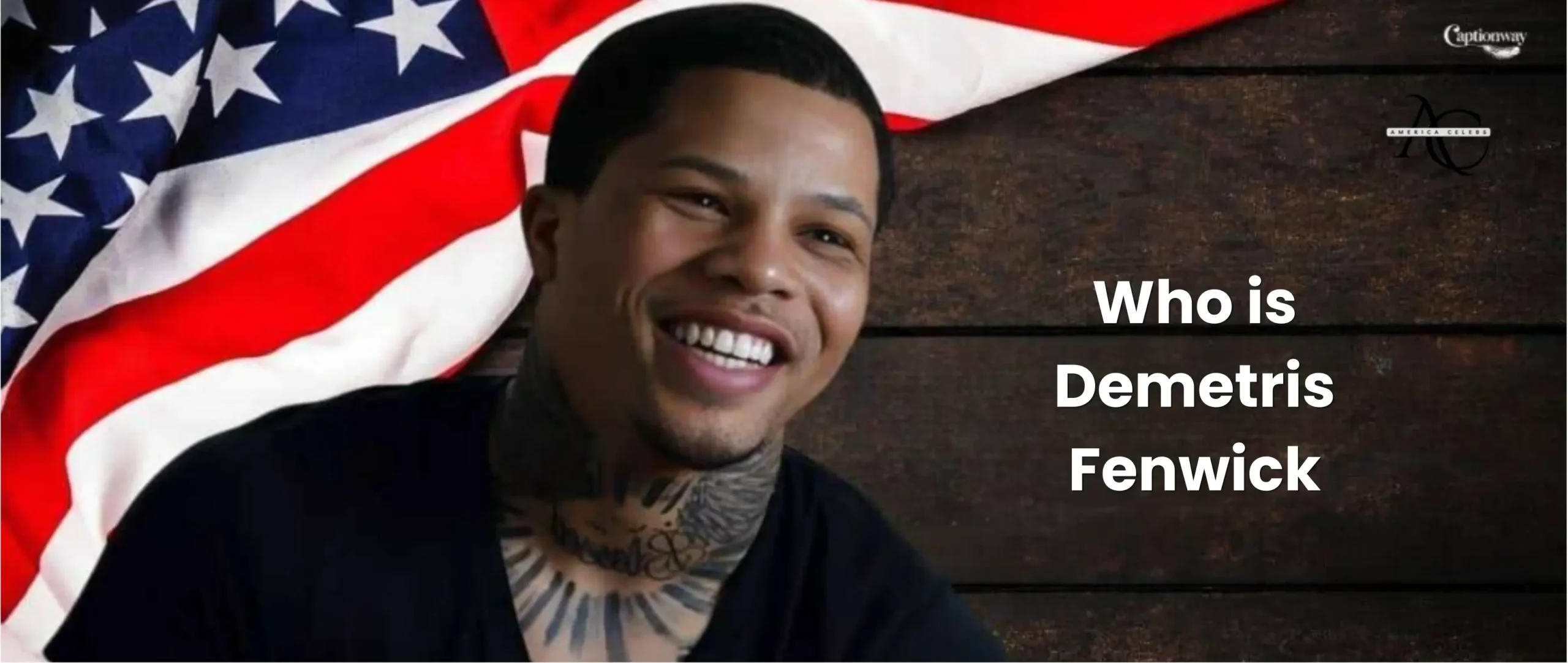
Demetris Fenwick 2026: Baltimore’s Powerful Boxing Talent
Demetris Fenwick trains before sunrise. While Baltimore sleeps, he is already at Upton Boxing Center in West Baltimore, running combinations, drilling footwork, sharpening the technical precision that has defined his entire professional career. He does not have a Floyd Mayweather backed promotional deal. He does not headline pay per view events. What he has is a 15 win, 3 loss, 1 draw professional record, IBF lightweight contender status, Golden Gloves credentials, and a story that the boxing world is only now beginning to properly understand.
In 2026, Demetris Fenwick is 29 years old exactly the age when fighters with his foundation either break through to the championship level or remain the best kept secret in their sport. He is at that inflection point right now. Everything he has built since his 2015 professional debut, every regional fight taken for modest purses, every technical improvement under legendary trainer Kenny Ellis, has positioned him for something bigger. The only question is whether the boxing world will notice before or after it happens.
Demetris Fenwick Quick Profile 2026
| FIELD | DETAILS |
| Full Name | Demetris Fenwick |
| Date of Birth | May 28, 1997 |
| Age in 2026 | 29 years old |
| Birthplace | Baltimore, Maryland, USA |
| Nationality | American |
| Height | 5 ft 7 in (approximately) |
| Reach | 68 inches |
| Weight Class | Lightweight and Super Featherweight |
| Fighting Stance | Orthodox |
| Amateur Record | 206 wins, 15 losses |
| Amateur Highlights | 2x National Junior Olympics Gold Medalist, Golden Gloves Champion |
| Professional Record | 15 wins, 3 losses, 1 draw (4 KOs) as of 2026 |
| Professional Status | IBF Lightweight Contender |
| Training Gym | Upton Boxing Center, West Baltimore |
| Head Trainer | Kenny Ellis (trainer and life coach); collaboration with Calvin Ford |
| Notable Win | 2019: Outboxed undefeated 14 and 0 Miguel Santos over 10 rounds |
| Notable Loss | Controversial split decision loss in IBF Regional Title fight |
| Professional Debut | 2015 vs. Marcus Johnson ($800 purse) |
| Net Worth (2026) | Estimated $200,000 to $500,000 |
| Community Program | Fighting for Change youth mentorship, Upton Boxing Center |
| Connection | Shares foster care upbringing and Upton Boxing Center background with Gervonta Tank Davis |
| Relationship Status | Private; not publicly confirmed |
Early Life: Sandtown Winchester and the Road to Boxing
Demetris Fenwick was born on May 28, 1997, in Baltimore, Maryland. He grew up in Sandtown Winchester, one of West Baltimore’s most challenged neighborhoods, a community defined by a 45% poverty rate and a high school graduation rate that bottomed out at 58%. For a child growing up there, the statistical odds of making something lasting out of life were not favorable. Fenwick did not have the luxury of ignoring those odds. He had to beat them one day at a time.
His early childhood was marked by significant instability. His parents struggled with addiction, and he and his brother Gervonta Davis were placed into foster care. It was their grandmother, Deborah Easter, who eventually gained custody of both boys, providing the stable foundation that allowed them to focus on something beyond daily survival. Fenwick has credited that stability as the turning point that made everything else possible.

His mother, Miss Ruby Fenwick, instilled three core values in him from an early age: faith, endurance, and integrity. Those values did not come from a place of comfort. They came from necessity, from watching a family hold together under pressure that would break most people.
Boxing found Demetris, or more precisely, the Upton Boxing Center found him. Situated in the heart of West Baltimore, Upton has been the training ground for some of the city’s most talented fighters for decades. Under the guidance of trainer Kenny Ellis, Fenwick discovered not just a sport but a structure. Ellis operated by three non negotiable rules for every fighter he trained: academic performance had to come before any time on the bags; every opponent had to be treated with mandatory respect; and monthly community service hours were required without exception. These were not suggestions. They were the terms of membership.
LeBron James Biography in 2026: Career, Stats, Net Worth
Amateur Career: 206 Wins and Two National Junior Olympics Gold Medals
Before Demetris Fenwick ever signed a professional contract, he built one of the most decorated amateur boxing records in Baltimore’s recent history. His amateur record stands at 206 wins against 15 losses, a volume of competition that most fighters never approach, and a win percentage that speaks directly to the technical foundation he developed under Kenny Ellis at Upton Boxing Center.
He won two National Junior Olympics gold medals. He earned Golden Gloves championship recognition. These are not regional participation trophies. They are legitimizing credentials in the amateur boxing world, the same pathway that produced countless world champions before him.
His amateur career was built on technical precision, not power. Even at 5 feet 7 inches competing against fighters who often carried more natural size and reach, Fenwick learned to use his 68 inch reach intelligently, keeping opponents at the end of his jab, controlling distance, and refusing to engage on terms that favored the other fighter. By the time he turned professional in 2015, he was not a raw talent learning the basics. He was a fully formed technical boxer entering the professional ranks with a clear identity and a clear game plan.
Professional Boxing Career: Building Credibility the Hard Way
Demetris Fenwick made his professional debut in 2015 against Marcus Johnson. His purse for that fight was $800. He has never talked about that number with bitterness. He took it as the starting point, the first brick in something he intended to build slowly and correctly.
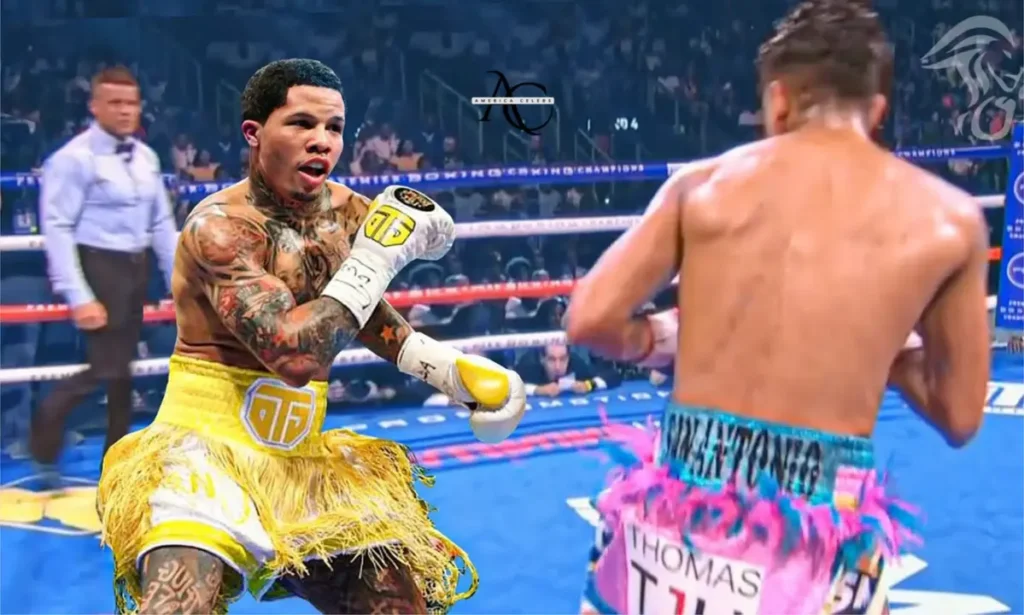
His professional career since that debut has followed the path of a fighter who values legitimate competition over padded records. He has not accumulated wins against opponents who were paid to lose. He has fought regionally, taken competitive matchups, and built a record of 15 wins, 3 losses, and 1 draw with 4 knockouts that reflects a serious professional career rather than a manufactured one.
Professional Boxing Record Highlights
| Year | Opponent | Result | Notes |
| 2015 | Marcus Johnson | Win | Professional debut; $800 purse |
| 2019 | Miguel Santos (14 wins, 0 losses) | Win (10 rounds) | Signature victory; outboxed undefeated opponent |
| Various | IBF Regional Title Fight | Loss (Split Decision) | Controversial result; validated elite contender status |
| 2026 | Active | In Career | 15 wins, 3 losses, 1 draw (4 KOs); IBF Lightweight Contender |
His signature win came in 2019 against Miguel Santos, an undefeated fighter standing at 14 wins and 0 losses entering that bout. Over ten rounds, Fenwick did what technical boxers do when they are at their best. He made a dangerous undefeated opponent look beatable by outboxing him completely. It was not a spectacular knockout. It was something more difficult: a systematic, disciplined performance that exposed every gap in Santos’s game while protecting his own.
The most debated result of his career came in an IBF Regional Title fight that ended in a controversial split decision loss. The loss itself hurt. The takeaway, however, was broader. Even the people who scored the fight the other way acknowledged that Demetris Fenwick belonged in conversations about elite lightweight contenders. A split decision in a title fight is not proof of inadequacy. It is proof of proximity to something significant.
In 2026, he began collaborating directly with Calvin Ford, the renowned trainer most famous for developing Gervonta Davis into a world champion. That collaboration represents a meaningful technical upgrade to his fight camp and signals that the people around Fenwick believe the next chapter of his career should include major fights.
Boxing Style: The Technical Fighter Baltimore Produced
Demetris Fenwick fights from an orthodox stance. He is not a knockout artist. Four stoppages in fifteen professional wins tells you that his victories are earned on points, on technical superiority, on outthinking and outworking opponents over multiple rounds. That is not a weakness. It is a profile.
His 68 inch reach is the foundation of everything he does in the ring. His defensive strategy is built entirely around distance management, keeping opponents at the end of his jab where their power shots cannot reach him effectively, then countering with the precise combinations he has drilled for thousands of hours. Year after year of training taught him to maximize his frame against fighters who often carry more natural punching power.
His ring IQ is what separates him from fighters with similar physical tools. He reads opponents in real time, identifies their patterns, and adjusts within rounds. His footwork is a reflection of his amateur background, clean, purposeful, always positioning him to make the shots he wants while taking away the shots his opponent is looking for.
His knockout count is lower than highlight reel fighters, but his technical skill level is among the highest in his weight class at the regional level. He is the kind of fighter who makes elite opponents look average, not through brute force, but through the accumulated intelligence of over 220 combined amateur and professional bouts.
Demetris Fenwick vs. Gervonta Davis: Same Roots, Different Trajectories
The connection is real and significant. Both men grew up in West Baltimore. Both entered foster care during difficult childhoods. Both trained at Upton Boxing Center. Both came up in the same environment, under the same city’s pressure, shaped by the same neighborhood’s specific combination of hardship and fight.
The divergence in their careers is not a reflection of one fighter having more talent than the other. It is a reflection of the promotional machinery that exists in professional boxing, and how rarely that machinery aligns with fighters who grind through the regional circuit without mainstream backing. Gervonta Davis secured Floyd Mayweather Promotions backing early in his career. That relationship provided access to large platforms, major television deals, and the kind of exposure that turns regional talent into global stars. Fenwick built his career independently, through his own credibility, his own technical mastery, and his own reputation in the gyms and circuits where boxing people actually pay attention.
Fenwick’s recent collaboration with Calvin Ford, Davis’s own legendary trainer, closes that gap in a meaningful way. It signals respect in both directions and represents a real shift in the trajectory of his professional development.
There is no bitterness in the Fenwick camp about the comparison. Fenwick has consistently defined success on his own terms, not in relation to his brother’s pay per view gates or championship belts, but in relation to what he is building inside the ring and outside of it in Baltimore. That clarity of purpose is itself a form of championship.
Demetris Fenwick Net Worth 2026
Demetris Fenwick’s net worth in 2026 is estimated between $200,000 and $500,000. Some estimates from boxing focused sources place the figure as high as $750,000, reflecting his combination of fight purses, training income, local sponsorships, and community program revenue.
| Income Source | Details |
| Professional Fight Purses | Ranged from $800 (2015 debut) to $5,000 to $15,000 per fight at regional and contender level |
| Coaching and Training | Training fees at Upton Boxing Center for amateur and professional fighters |
| Community Programs | Income from structured youth mentorship and after school programs |
| Local Sponsorships | Regional business partnerships tied to his community profile |
| Community Reinvestment | Reinvests an estimated 60% of net earnings back into his Fighting for Change program |
Community Work: Fighting for Change Program
If Demetris Fenwick is remembered in Baltimore for only one thing, it will not be a fight result or a championship belt. It will be the Fighting for Change program, his youth mentorship initiative that operates out of Upton Boxing Center and reaches at risk young people across West Baltimore.
The program is structured around three pillars: boxing training, academic support, and character development. Kids who walk through the door get access to structured physical training and the discipline that comes with it. They also get after school academic support, including homework assistance, tutoring, and an expectation that education comes before athletic ambition. And they get the kind of mentorship from Fenwick and his coaches that puts responsibility, respect, and accountability at the center of everything.
Fenwick did not design this program from the outside looking in. He designed it from the inside looking back. He knows what a 14 year old in Sandtown Winchester is facing on a Tuesday afternoon when school ends and the streets are the easiest available option. He has been that kid. The program exists because he believes, based on his own life, that the right structure at the right moment can redirect a trajectory entirely.
Beyond Fighting for Change, Fenwick has been connected to broader community initiatives including youth violence prevention through sports based development and the COIL organization. His after school programming specifically targets the high risk window between the end of the school day and dinner, the hours when young people in under resourced neighborhoods are most exposed to negative influences. His community work has earned him a reputation in West Baltimore that operates completely independently of his boxing record. In his neighborhood, he is not primarily known as an IBF lightweight contender. He is known as someone who shows up.
Family and Personal Life
Demetris Fenwick keeps his personal life deliberately private. There is no publicly confirmed information about a wife or girlfriend. He has not shared details of any romantic relationship in interviews or on social media, and boxing media has consistently respected that boundary.
What is confirmed about his personal life is the family structure that shaped him: the foster care background he shared with Gervonta Davis, the stability provided by his grandmother Deborah Easter, and the values instilled by his mother Miss Ruby Fenwick. Those relationships, the ones that formed him, are the ones he speaks about when he chooses to speak personally.
His life in 2026 is organized around training, community work, and the young people in his mentorship program. He has described that combination, the ring and the neighborhood, as the two things that give his career its meaning beyond boxing statistics.
What Is Next for Demetris Fenwick in 2026
Entering 2026, Demetris Fenwick is at the most important moment of his professional boxing career. At 29, he sits squarely inside the 26 to 32 athletic prime window for elite fighters. His technical foundation is fully developed. His new collaboration with Calvin Ford represents a measurable upgrade in his training camp quality. His IBF lightweight contender status gives him a legitimate pathway to ranked fights that could lead to a title shot.
The boxing world has a long history of rewarding fighters who simply refuse to stop, who take the regional circuit seriously, build real credentials against real opponents, and stay ready when the opportunity arrives. Fenwick is precisely that kind of fighter.
His stated goals for 2026 extend beyond individual fight results. He envisions using his growing platform to expand youth boxing initiatives across Baltimore and to bring national attention to the community transformation work that has defined his career as much as any fight result. The ring is his vehicle. The destination is larger than any belt.
FAQs
How old is Demetris Fenwick in 2026?
Demetris Fenwick is 29 years old in 2026. He was born on May 28, 1997, in Baltimore, Maryland. At 29, he is in the prime athletic window for elite professional boxers.
What is Demetris Fenwick’s boxing record?
As of 2026, Demetris Fenwick’s professional record is 15 wins, 3 losses, and 1 draw with 4 knockouts. He is an IBF lightweight contender and a former Golden Gloves champion with an amateur record of 206 wins and 15 losses.
Is Demetris Fenwick related to Gervonta Davis?
Demetris Fenwick and Gervonta Tank Davis share the same Baltimore background, were raised together in foster care, and both trained at Upton Boxing Center in West Baltimore. They are widely described as brothers due to their shared upbringing under the same household structure. They are not biological brothers.
What is Demetris Fenwick’s net worth in 2026?
Demetris Fenwick’s net worth in 2026 is estimated between $200,000 and $500,000. He earns income from professional fight purses, coaching at Upton Boxing Center, local sponsorships, and community program revenue. He is known to reinvest approximately 60% of his earnings back into his Fighting for Change youth program.
Who trained Demetris Fenwick?
Demetris Fenwick was trained primarily by Kenny Ellis, who served as both his boxing trainer and life coach. Ellis enforced mandatory academic performance, respect for opponents, and monthly community service as conditions of training. In 2026, Fenwick began collaborating with Calvin Ford, the renowned trainer best known for developing Gervonta Davis.
What weight class does Demetris Fenwick compete in?
Demetris Fenwick competes primarily in the lightweight and super featherweight divisions. He is currently recognized as an IBF lightweight contender.
Conclusion
The complete picture of Demetris Fenwick is this: a child who grew up in one of West Baltimore’s hardest neighborhoods, placed in foster care with his brother Gervonta Davis, who found structure and purpose inside Upton Boxing Center under a trainer who demanded academics and community service before anyone touched a speed bag. Who built a 206 win amateur career, earned two National Junior Olympics gold medals, and turned professional for $800 against a fighter nobody remembers.
Who fought his way to a 15 win, 3 loss, 1 draw record and IBF contender status through regional bouts and competitive matchups against real opponents, without a promotional machine pushing his name. Who then chose, when he had enough money to make different choices, to live modestly and reinvest 60% of his earnings into the kids growing up in the same neighborhood that formed him.