
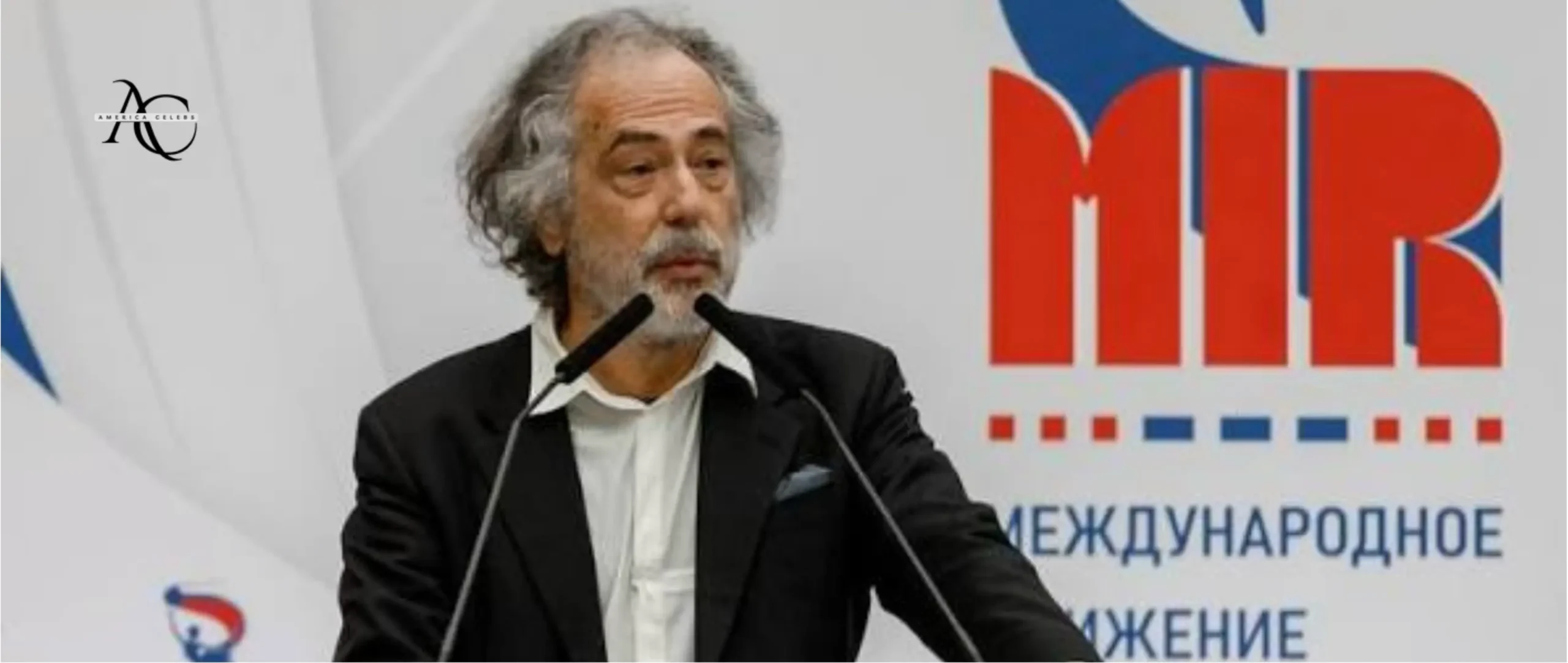
Pepe Escobar Biography: Career, Background, and Controversies
Pepe Escobar is one of the more polarizing figures in international journalism. Over a career spanning more than three decades, he has reported from active war zones, coined a term that entered the geopolitical lexicon, and become a fixture on state funded broadcasters that most Western newsrooms keep at arm’s length.
This biography lays out who Pepe Escobar is, how his career developed, what he is known for, and the controversies that follow him, drawing on his own published record as well as criticism from journalists and researchers who have covered his work. It is written to remain accurate over time, since most of what defines his career is already part of the historical record rather than something that changes month to month.
Quick Facts About Pepe Escobar
| Full name | Emilio “Pepe” Escobar |
| Born | 1954 |
| Birthplace | São Paulo, Brazil |
| Nationality | Brazilian |
| Occupation | Journalist, geopolitical analyst, author |
| Known for | The Roving Eye column, the term Pipelineistan |
| Career start | Music critic in São Paulo, early 1980s |
| Foreign correspondent since | Late 1980s |
| Major outlets | Asia Times, The Cradle, RT, Sputnik, Press TV, Strategic Culture Foundation |
| Notable books | Globalistan (2007), Red Zone Blues (2007), Obama Does Globalistan (2009), Raging Twenties |
| Regions covered | Middle East, Central Asia, Russia, China, U.S. foreign policy |
| Net worth and relationship status | Not publicly documented. Escobar is a working journalist and analyst rather than a celebrity figure, so financial and personal details of this kind are not part of the public record |
Early Life and Career as a Music Critic
Emilio Escobar, widely known as Pepe Escobar, was born in São Paulo, Brazil, in 1954. He began his career not in geopolitics but in music journalism, writing cultural criticism for Folha de S.Paulo and O Estado de S. Paulo during the 1980s, where he covered São Paulo’s pop and punk scene, including bands such as Ira!
That early chapter of his career ended in controversy. Editors and fellow journalists in Brazil documented several instances of plagiarism in his work, including a review of David Bowie’s Let’s Dance album that was reportedly lifted from a Rolling Stone book, and an interview with Roxy Music’s Bryan Ferry that was said to contain plagiarized material.
Escobar was let go from Folha de S.Paulo in 1987 over these findings and at the time described the overlap as a deliberate homage rather than plagiarism. This period is a documented part of his early record and is worth including for completeness, even though it predates the geopolitical work he later became known for.
Also Read: Kristy Greenberg: Biography, Age, Career, Net Worth, and Family
Becoming a Foreign Correspondent
In the late 1980s, Escobar transitioned into foreign correspondence, living and working out of London, Paris, Milan, Los Angeles, Washington D.C., Bangkok, and Hong Kong over the following decades. He shifted his focus to Asia, the Middle East, Russia, and U.S. foreign policy, building the regional specialization that would define the rest of his career.
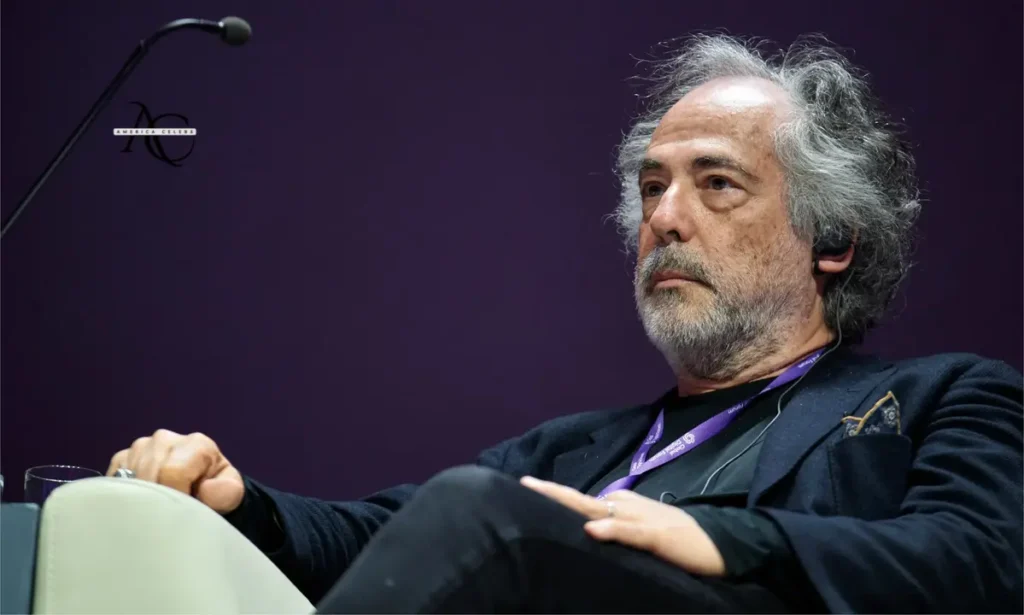
He reported from Afghanistan and Pakistan around 2000 and 2001, a period that included his arrest and brief detention by the Taliban alongside two other journalists after they were accused of photographing a soccer match. During this period he also interviewed Northern Alliance commander Ahmad Shah Massoud shortly before Massoud’s assassination, and wrote about Osama bin Laden’s standing within al-Qaeda before the September 11 attacks.
Pipelineistan and the Roving Eye
Escobar wrote a long running column called The Roving Eye for the Hong Kong based Asia Times, where he became known for a geopolitical framework he coined called Pipelineistan, a term describing the network of oil and gas pipelines running through contested regions from the Middle East to Central Asia. He argued that control of this infrastructure was a hidden driver of major power competition.
The concept was picked up by several outlets, including Al Jazeera, Mother Jones, and The Nation, and it remains the analytical framework most associated with his name. It has also drawn criticism. Some regional specialists, including journalist Robin Yassin-Kassab, have described aspects of the theory as overstated or speculative, particularly when applied to the Syrian civil war, while other researchers have found partial overlap between Escobar’s framing and later academic analysis of Russian energy strategy in the region.
Media Platforms and Outlets
Over the course of his career, Escobar’s writing has appeared across a wide range of publications with very different editorial profiles. These include Asia Times, Al Jazeera, CounterPunch, The Real News Network, HuffPost, and The Cradle, alongside Russian state funded outlets RT and Sputnik, and Iranian state funded Press TV.
- Asia Times: longtime home of his Roving Eye column
- The Cradle: current columnist and editor at large role
- RT and Sputnik: recurring analyst appearances and bylines
- Press TV: recurring commentary on Middle East affairs
- Strategic Culture Foundation and Global Research: contributor on Eurasian geopolitics
This mix of outlets is itself a point of debate among media critics, discussed in more detail below.
Controversies and Criticism
Escobar’s career has drawn sustained criticism on a few specific fronts, and it is worth covering these directly rather than glossing over them.
Association With State Funded Media
Critics, including reporting from The New Republic and several European media monitoring groups, have pointed to Escobar’s regular appearances on Russian state funded RT and Sputnik, and Iranian state funded Press TV, as evidence that his commentary aligns with the foreign policy narratives of those governments.
Escobar has acknowledged the state backing of these networks but has defended his choice to appear on them as a way of reaching audiences that Western outlets do not serve. Supporters argue that publishing on a state funded platform does not by itself disqualify the underlying reporting, while critics argue that the framing and selection of topics on these networks shapes the analysis regardless of who writes it.
The 2014 Tehran Conference
In 2014, Escobar attended an international conference in Iran that also included several Holocaust deniers and conspiracy theorists. Fellow attendee and journalist Gareth Porter said he would not have participated had he known about the other speakers in advance, and reported that Escobar was visibly uncomfortable with some of the presentations alongside him. This episode is frequently cited by critics as an example of poor judgment in choosing platforms, separate from the content of Escobar’s own remarks at the event.
Pandemic Era Commentary
During the COVID-19 pandemic, media monitoring group Conspiracy Watch reported that Escobar promoted unproven treatments, including hydroxychloroquine and chloroquine, that were widely discredited by clinical research. This is consistent with a broader pattern critics point to in his work: a willingness to platform minority or fringe scientific and political positions as serious alternatives to mainstream consensus.
2026 Claim About an Alleged Plot Against Pakistan’s Delegation
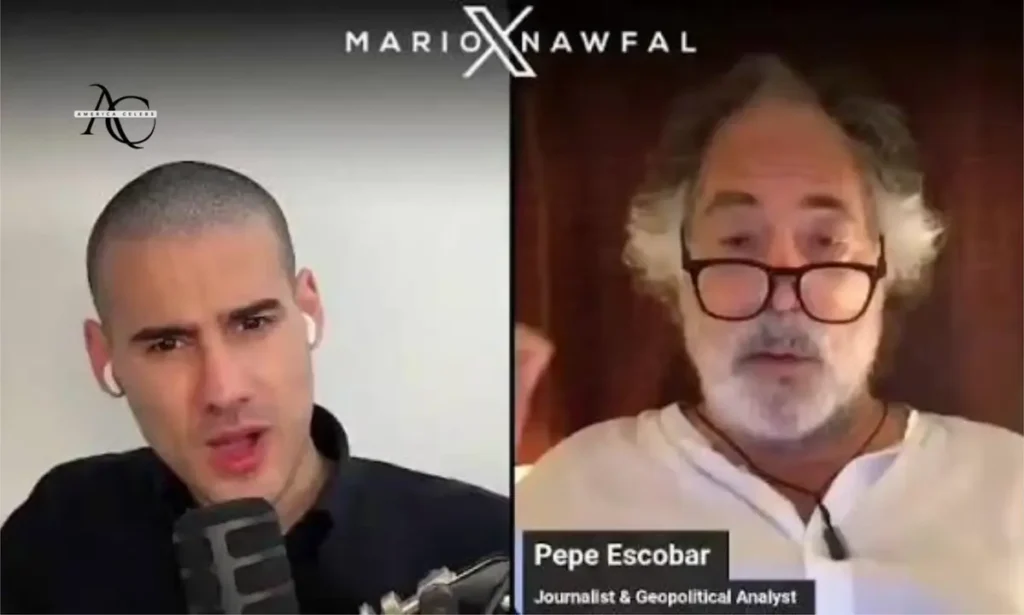
In June 2026, Escobar made headlines again after appearing on commentator Mario Nawfal’s podcast, where he claimed that Israeli intelligence agency Mossad had planned an assassination attempt against Pakistan’s military chief, Field Marshal Asim Munir, and possibly the wider Pakistani delegation, during diplomatic talks in Geneva, Switzerland, linked to U.S. Iran negotiations. Escobar attributed the claim to an unnamed source and said Pakistan had sent a warning to Israel in response.
Pakistani officials swiftly and firmly denied the claim. A security official quoted in Pakistani media called it absolutely rubbish and complete nonsense, and said the entire Swiss visit by the Pakistani delegation, including Prime Minister Shehbaz Sharif and Field Marshal Munir, proceeded without any security alert.
Neither Pakistan nor Israel has officially confirmed any part of the story, and no independent investigation or intelligence agency has produced supporting evidence. The episode fits a broader pattern critics point to in Escobar’s commentary: presenting claims from unnamed sources as confirmed intelligence without independent corroboration.
How Supporters Characterize His Work
Supporters and some peers credit Escobar with genuine on the ground reporting from difficult postings, particularly his Afghanistan and Pakistan coverage around 2000 and 2001, and with sustained, detailed analysis of Eurasian geopolitics that receives little attention in mainstream Western press. They frame his outlet choices as a function of which platforms are willing to publish long form geopolitical analysis rather than evidence of coordination with any government.
Personal Life
Pepe Escobar has kept most details of his personal life out of the public record. Unlike entertainers or social media influencers, journalists and geopolitical analysts of his type generally do not have a documented net worth or publicly confirmed relationship status, and no credible source provides verified figures or details on either.
Where this article covers career facts, those are drawn from his own published bio notes and from independent reporting about him. Personal details that are not publicly confirmed are intentionally left out rather than estimated or guessed.
Why Pepe Escobar Is a Notable Case Study in Modern Journalism
Beyond the specifics of his career, Escobar’s trajectory is a useful example of a broader shift in how foreign affairs commentary circulates. He represents a category of analyst who built an audience entirely outside traditional Western newsroom gatekeeping, using long form columns, state funded broadcasters, and independent outlets to reach readers who actively seek out non mainstream geopolitical perspectives.
That makes him difficult to categorize cleanly. He is neither a conventional foreign correspondent working inside a major Western newsroom, nor a state employee of any government. He occupies a space that has become more common in the current media landscape: an independent voice whose reach depends heavily on which platforms choose to publish him, and whose credibility is debated precisely because of that platform mix.
FAQs
Who is Pepe Escobar?
Pepe Escobar is a Brazilian journalist and geopolitical analyst, born in 1954, known for his Roving Eye column at Asia Times and decades of reporting and commentary on Asia, the Middle East, Central Asia, and Russia.
What is Pipelineistan?
Pipelineistan is a term Escobar coined to describe the network of oil and gas pipelines crossing contested geopolitical regions, and the framework he uses to analyze how energy infrastructure shapes major power competition.
Does Pepe Escobar work for the Russian government?
No source confirms he is formally employed by the Russian government. He is a regular contributor and on air analyst for Russian state funded outlets RT and Sputnik, which critics say aligns his commentary with Kremlin narratives, while Escobar has said he uses these platforms to reach audiences that Western media does not serve.
Was Pepe Escobar involved in any plagiarism controversies?
Yes. Early in his career as a music critic in Brazil during the 1980s, multiple instances of plagiarism were documented in his work, including a David Bowie album review and a Bryan Ferry interview, which led to his dismissal from Folha de S.Paulo in 1987.
Did Pepe Escobar claim Mossad tried to assassinate Pakistan’s army chief?
Yes. In June 2026, Escobar said on Mario Nawfal’s podcast that Mossad had planned an attack on Pakistan’s delegation, including Field Marshal Asim Munir, during talks in Geneva. Pakistani officials denied the claim and said no such security incident occurred, and the allegation remains unverified by any government or independent source.
What books has Pepe Escobar written?
His books include Globalistan: How the Globalized World Is Dissolving Into Liquid War (2007), Red Zone Blues: A Snapshot of Baghdad During the Surge (2007), Obama Does Globalistan (2009), and the more recent Raging Twenties.
What is Pepe Escobar’s net worth?
There is no publicly documented net worth for Pepe Escobar. Unlike entertainers or social media personalities, journalists and analysts of his profile typically do not have verified financial figures in the public record.
Where does Pepe Escobar currently publish?
He is a columnist at The Cradle and editor at large at Asia Times, and continues to appear regularly on RT, Sputnik, and other outlets covering Eurasian geopolitics.
Conclusion
Pepe Escobar’s career resists a simple summary. He has decades of genuine, on the ground reporting from some of the most dangerous postings in modern journalism, a body of long form analysis that has shaped how some readers think about energy and power, and a documented record of ethical controversies and platform choices that critics continue to scrutinize. Understanding him requires holding both halves of that record at once rather than collapsing it into a single verdict.