Florentino Perez Net Worth 2026: Real Madrid, ACS Empire and the Man Who Built a Dynasty
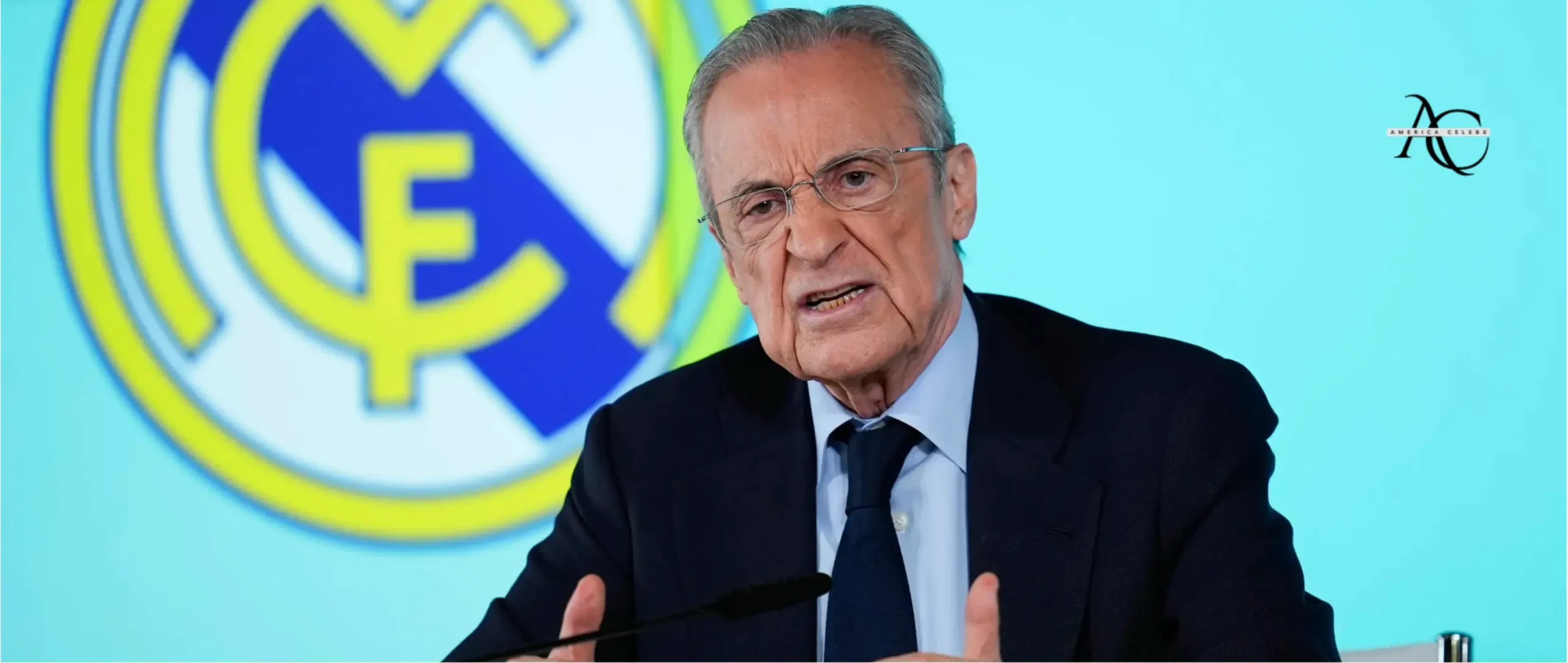
There is a version of Real Madrid that exists in the history books, built on Di Stefano, Puskas, and six consecutive European Cups in the 1950s. And then there is the version that exists in the present, built by one man in a suit who has been sitting in the presidential chair of the Santiago Bernabeu for the better part of 25 years. Florentino Perez did not just manage Real Madrid. He reinvented it, monetised it, and turned it into the most valuable football club on earth.
This is the complete breakdown of Florentino Perez’s net worth in 2026, his career from civil engineer to construction billionaire, his two presidential terms at Real Madrid, the Galacticos strategy that changed world football, and what he is building next.
| $3B+ Estimated Net Worth | 7 Champions Leagues as President | 37+ Trophies Won at Real Madrid | 1B+ Bernabeu Renovation (Euros) |
Florentino Perez Quick Profile 2026
| Full Name | Florentino Perez Rodriguez |
| Born | March 8, 1947, Madrid, Spain |
| Age in 2026 | 79 years old |
| Nationality | Spanish |
| Education | Civil Engineering, Polytechnic University of Madrid |
| Profession | Businessman, Civil Engineer, Football Club President |
| Company | Grupo ACS (Chairman and CEO), Spain’s largest construction company |
| Real Madrid | President, first term 2000 to 2006; second term 2009 to present |
| Net Worth 2026 | $3 billion to $3.9 billion (estimated) |
| ACS Salary | $6.1 million reported annually (2016 figures, performance-based) |
| Real Madrid Salary | Approximately 4.7 million GBP annually as club president |
| Champions Leagues | 7 titles as president: 2002, 2014, 2016, 2017, 2018, 2022, 2024 |
| Total Trophies | 37 and counting across both presidential terms |
| Major Signings | Figo, Zidane, Ronaldo R9, Beckham, Cristiano Ronaldo, Kaka, Benzema, Mbappe |
| Bernabeu Project | Over 1 billion euro renovation completed 2023 to 2024 |
| Super League | Spearheaded the European Super League project in April 2021 |
| Wife | Maria Angeles Sandoval Montero (married 1970, died 2012) |
| Children | Three children |
| Political Career | Madrid city council; General Director of Transport Infrastructure, Ministry of Transport |
Who Is Florentino Perez? From Madrid Suburb to Construction Billionaire
Florentino Perez Rodriguez was born on March 8, 1947 in Madrid, Spain, into a middle-class family. His father was a modest businessman and his mother ran the household. Growing up in the Spanish capital in the post-war years, Perez developed an early interest in engineering and business, attending the Polytechnic University of Madrid where he earned a degree in civil engineering.
His professional life started in the construction industry but he was also drawn to politics. He joined the Union of the Democratic Centre party in 1979 and served on Madrid’s city council. He ran in the Spanish general elections in 1986 as a candidate for the Democratic Reformist Party and served as its secretary-general. Politics did not hold him for long. The frustrations of Spanish political life pushed him back toward business, which turned out to be where his real genius lay.
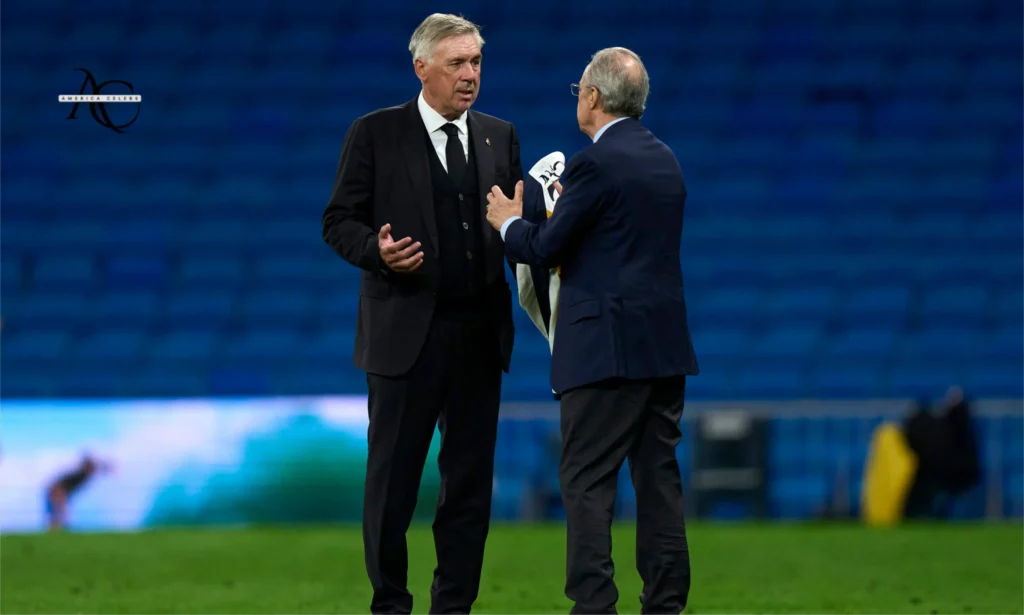
By 1993 he was named vice chairman of OCP Construcciones. Following a series of mergers and corporate restructurings, he became chairman of Actividades de Construccion y Servicios, known as ACS, in 1997. Under his leadership, Grupo ACS grew into Spain’s largest construction and civil engineering company, operating across more than 70 countries and employing hundreds of thousands of people. His personal stake in ACS, combined with salary, bonuses, and investment income, built the fortune that Forbes currently estimates at between $3 billion and $3.9 billion.
The First Presidency: Galacticos, Glory, and the Fall
In 1995, Perez made his first attempt to become president of Real Madrid. He lost. It was one of the rare early defeats of his professional life, and he spent the next five years watching from the outside as the club he had loved since childhood drifted into financial difficulty.
In 2000 he ran again, and this time he won with over 55 percent of the vote on the back of an extraordinary campaign promise: he would sign Luis Figo from Barcelona. For anyone unfamiliar with the depth of Spanish football rivalry, this was the equivalent of promising to steal fire from the gods. Figo was Barcelona’s captain, their best player, and a symbol of the club. Perez signed him. The transfer fee was approximately 62 million euros. Barcelona fans never fully forgave either of them.
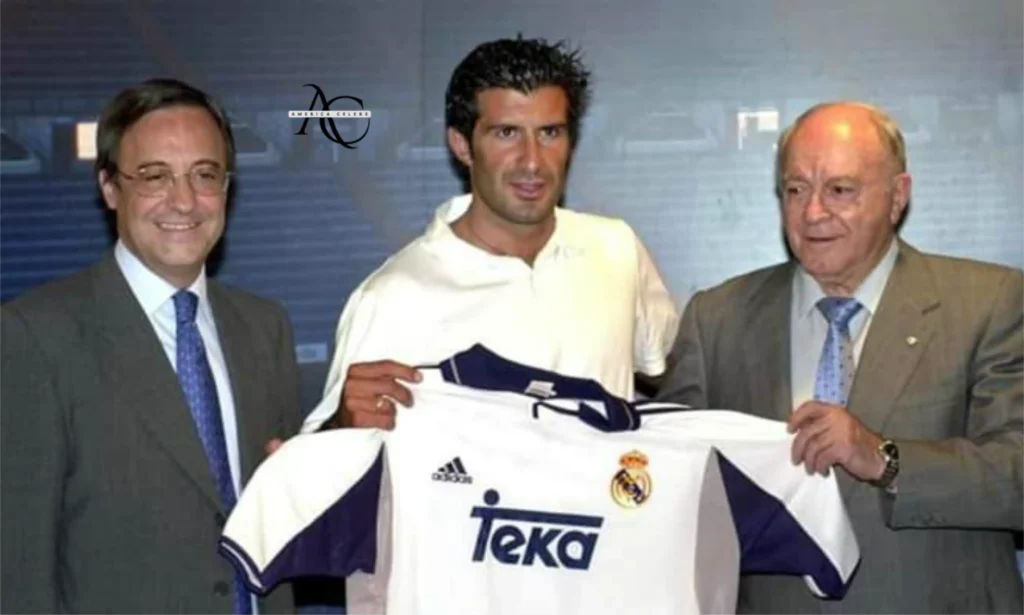
That move set the template for what became known as the Galacticos strategy: sign one of the world’s best players every summer, combining elite footballing ambition with maximum commercial impact. The signings that followed were genuinely historic.
The Galacticos Signings, 2001 to 2004
In 2001, Zinedine Zidane arrived from Juventus for a world-record fee of 77 million euros. In 2002, Brazilian striker Ronaldo arrived from Inter Milan. In 2003, David Beckham joined from Manchester United, bringing his global commercial profile alongside his on-field ability. In 2004, Michael Owen was added. Real Madrid won two La Liga titles and a Champions League, their ninth European Cup, in 2002. The plan worked, spectacularly, for the first three years.
The Resignation, February 2006
Then it stopped working. Between 2003 and 2006, Real Madrid won nothing of significance. The revolving door of managers, including Queiroz, Camacho, Garcia Remon, Luxemburgo, and Lopez Caro, became a symbol of instability. Members of the club began to protest openly. On February 27, 2006, Florentino Perez resigned. He cited the lack of results and his own inability to turn the situation around. For a man defined by success, it was a genuinely difficult moment, and he stepped back from the club’s public life for three years.
| I am convinced that if this project does not come out, another will come out. Florentino Perez on the European Super League collapse, via El Larguero |
Second Presidency and the Dominance of Europe
On June 1, 2009, Florentino Perez was re-elected as Real Madrid president, this time unopposed. He had spent three years watching from the outside, studying what had gone wrong, and planning what would come next. The version of Perez that returned was more tactically aware of what a football club required beyond the marquee signing.
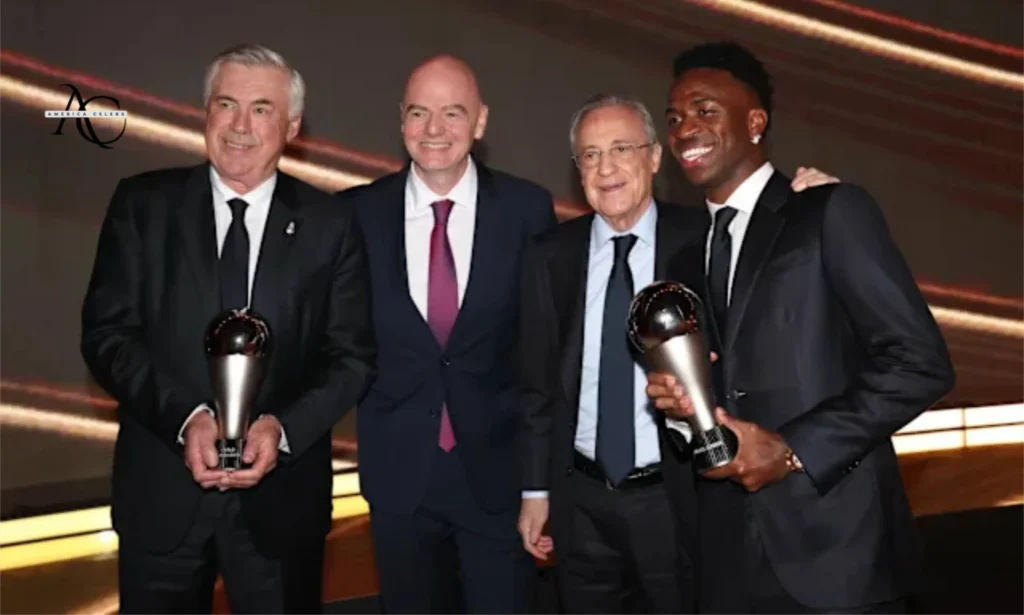
His first act of the new era was breathtaking in scale. He signed Kaka from AC Milan for 65 million euros. He then signed Cristiano Ronaldo from Manchester United for 80 million euros, a new world record. In a single summer he spent more than 250 million euros on players. The message was clear: Real Madrid were back, and they were building for more than just commercial spectacle this time.
The Champions League Era, 2014 to 2022
What followed over the next decade was unprecedented in the history of European football. Real Madrid won the Champions League in 2014, defeating Atletico Madrid in the final. They won it again in 2016, 2017, and 2018, three consecutive titles under Zinedine Zidane, who had reinvented himself as one of the great managers of his generation. They won it again in 2022 in a campaign widely described as one of the greatest in the tournament’s history, eliminating PSG, Chelsea, Manchester City, and Liverpool in succession.
2024 Champions League and the Mbappe Era
In 2024, Real Madrid won their 15th European Cup, defeating Borussia Dortmund in the final at Wembley. That same summer, Kylian Mbappe finally arrived at the club on a free transfer from Paris Saint-Germain, a move Perez had been pursuing publicly and privately for the better part of three years. Mbappe went on to score 59 Real Madrid goals in 2025, quickly becoming one of the most productive strikers in the club’s history.
The Bernabeu Renovation: A Billion-Euro Statement
Perhaps no single project better illustrates Florentino Perez’s ambition and long-term thinking than the renovation of the Santiago Bernabeu stadium. The project, which cost over one billion euros and was completed between 2023 and 2024, transformed one of football’s most iconic venues into a multi-purpose entertainment complex unlike anything else in world sport.
The new Bernabeu features a retractable roof, a cutting-edge pitch that can be retracted to expose an arena floor, and facilities designed to host concerts, NFL games, boxing matches, and other major events year-round. The commercial revenue potential from a venue that operates 365 days per year rather than 20 to 25 matchdays per season was central to Perez’s financial vision for the club.
The project was financed through a combination of club funds, debt, and commercial partnerships, with Perez personally overseeing the construction planning given his background in civil engineering. It is the most expensive stadium renovation in football history and positions Real Madrid’s commercial revenues well above any rival club for the foreseeable future.
Florentino Perez Net Worth 2026: The Full Financial Picture
Florentino Perez’s net worth in 2026 is estimated between $3 billion and $3.9 billion depending on the source. Forbes placed his worth at $3 billion in 2025, while MarketScreener data indicated a figure of $3.925 billion as of the end of 2025. He is consistently ranked among the wealthiest individuals in Spain.
- ACS Group wealth: The foundation of his fortune is his stake in Grupo ACS, which he chairs and co-leads as CEO. ACS operates in more than 70 countries across construction, industrial services, and energy infrastructure. In 2016, El Confidencial reported his annual ACS compensation at $6.1 million, predominantly performance-related bonuses, and that figure has likely grown substantially alongside the company’s expansion.
- Real Madrid salary: His compensation as club president is reported at approximately 4.7 million GBP annually. Relative to his overall wealth this is, as one analyst put it, a pittance, but across 17 years in the role it represents tens of millions in cumulative income.
- Property and investments: Multiple sources indicate substantial property holdings in Spain and internationally, as well as stock and investment portfolio wealth accumulated over decades at the helm of one of Europe’s largest construction conglomerates.
- Real Madrid’s commercial value: While Perez does not own Real Madrid in the traditional sense (the club is owned by its members), his presidency has presided over the club’s value rising to over $6 billion according to Forbes, generating the commercial revenue streams that fund the signings, renovations, and global brand positioning he has championed.
The Super League Controversy and What It Revealed About Perez
In April 2021, Florentino Perez was the driving force behind the announcement of the European Super League, a breakaway competition involving 12 of Europe’s biggest clubs. The announcement caused an immediate and intense public backlash. Within 48 hours, nine of the 12 founding clubs had withdrawn under pressure from fans, governments, and UEFA. Perez and Real Madrid remained.
His response to the collapse was characteristically unapologetic. He told El Larguero that he was convinced that if this project did not come out, another would. He framed the Super League not as a power grab but as a financial survival strategy for top clubs facing declining broadcast revenues in a post-pandemic landscape.
What the Super League episode revealed about Perez is something that defines his entire career: he operates on a longer timeline than most people around him. He is willing to absorb short-term criticism, intense public hostility, and reputational damage in service of what he believes is the correct long-term direction. Whether you agree with his football economics or not, that quality, more than any individual signing, is what has made him the most successful president in Real Madrid’s history.
Personal Life: Marriage, Loss, and the Private Florentino
Florentino Perez married Maria Angeles Sandoval Montero, known to friends as Pitina, in 1970. They had three children together over more than four decades of marriage. She died in 2012, a loss he has spoken about with visible emotion in the rare interviews where it has come up. The stadium she never got to see completed in its current form was in planning long before her death.
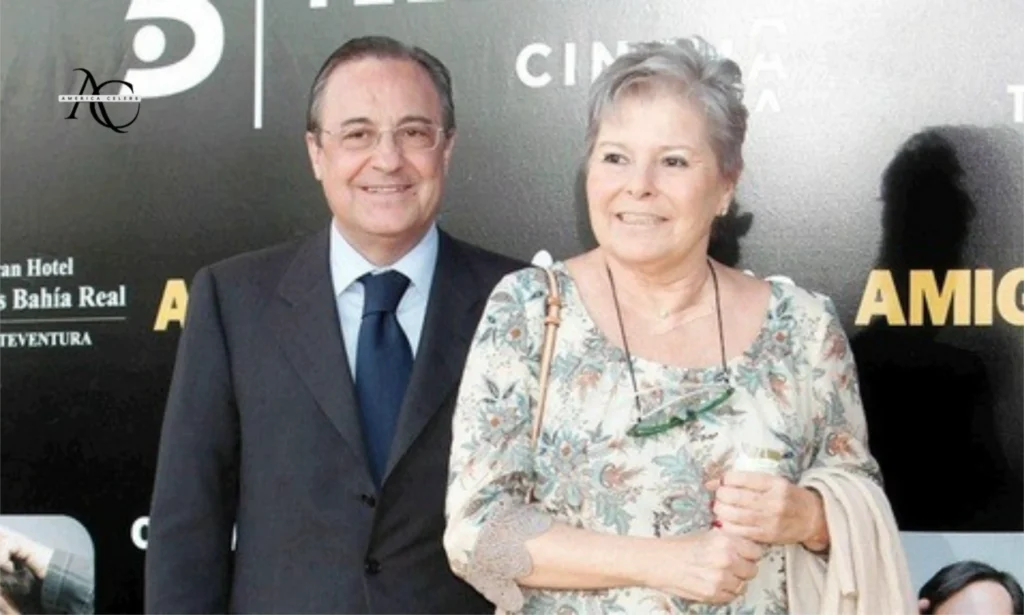
Perez keeps his personal life deliberately private for a man of his public profile. He rarely grants personal interviews and the biographical information publicly available about his day-to-day private life is limited to what he has chosen to share at formal events or through official channels. He was diagnosed with COVID-19 during the pandemic and recovered. Beyond that, his biography is almost entirely professional.
FAQs
Q1: Does Florentino Perez own Real Madrid?
No. Real Madrid is a member-owned club, structured as a sporting association under Spanish football law. The club’s members, known as socios, are the collective owners, and they elect the president. Perez holds the presidency, not ownership in the commercial sense. This is why he earns a salary from the club rather than taking profits as an owner would. His personal wealth comes from his role at Grupo ACS and his own investments, not from equity in Real Madrid.
Q2: How many Champions League titles has Real Madrid won under Perez?
Seven. Real Madrid won the Champions League in 2002, 2014, 2016, 2017, 2018, 2022, and 2024 during Perez’s two presidential terms. Before his first presidency began in 2000, the club had won the European Cup seven times between 1956 and 1998. Adding his seven titles brings the club’s total to 15 European Cups, the most of any club in the competition’s history.
Q3: Why did Florentino Perez resign in 2006?
Perez resigned in February 2006 after a prolonged period without major trophies that began in 2003. The Galacticos strategy had delivered two La Liga titles and one Champions League in the early years of his first term, but the team struggled to maintain consistency as the squad became increasingly imbalanced. The constant rotation of managers, five in just a few years, added to the instability, and club members began to protest openly.
Q4: What is Grupo ACS and how big is it?
Grupo ACS is Spain’s largest construction and civil engineering company, and one of the largest in the world. It operates in more than 70 countries across construction, industrial services, and energy infrastructure. Perez has led the company since its formation through mergers in 1997 and serves as its chairman and co-CEO. The company’s scale and international reach are the primary source of his multi-billion dollar personal fortune.
Q5: What happened to the European Super League?
The European Super League was announced in April 2021 with 12 founding clubs including Real Madrid, Barcelona, Juventus, Liverpool, Manchester United, Arsenal, Chelsea, Manchester City, Tottenham, Atletico Madrid, AC Milan, and Inter Milan. Within 48 hours of the announcement, the nine English, Spanish, and Italian clubs that were not Real Madrid, Barcelona, or Juventus had withdrawn under intense pressure from fans, government officials, and UEFA. Perez remained defiant, insisting a version of the project would eventually happen. Legal challenges continued for several years after the initial collapse.
Conclusion
Florentino Perez is 79 years old, worth between $3 billion and $3.9 billion, and still sitting in the presidential chair at the Santiago Bernabeu. He began as a civil engineer from Madrid who loved football. He became Spain’s most powerful construction executive. He then turned Real Madrid into the richest and most trophy-laden club in the history of the sport.
His career contains failures, most notably the trophy drought that ended his first presidency and the rapid collapse of the Super League project he had spent years building. But his response to both setbacks was the same: he came back, he adapted, and he eventually won. That is the pattern of Florentino Perez across eight decades of life.
The Bernabeu renovation, the Mbappe signing, the 15th European Cup, and the commercial infrastructure he has built make Real Madrid’s position in world football stronger now than at any point in the club’s history. Whatever comes next, the version of the club that exists in 2026 is his creation.