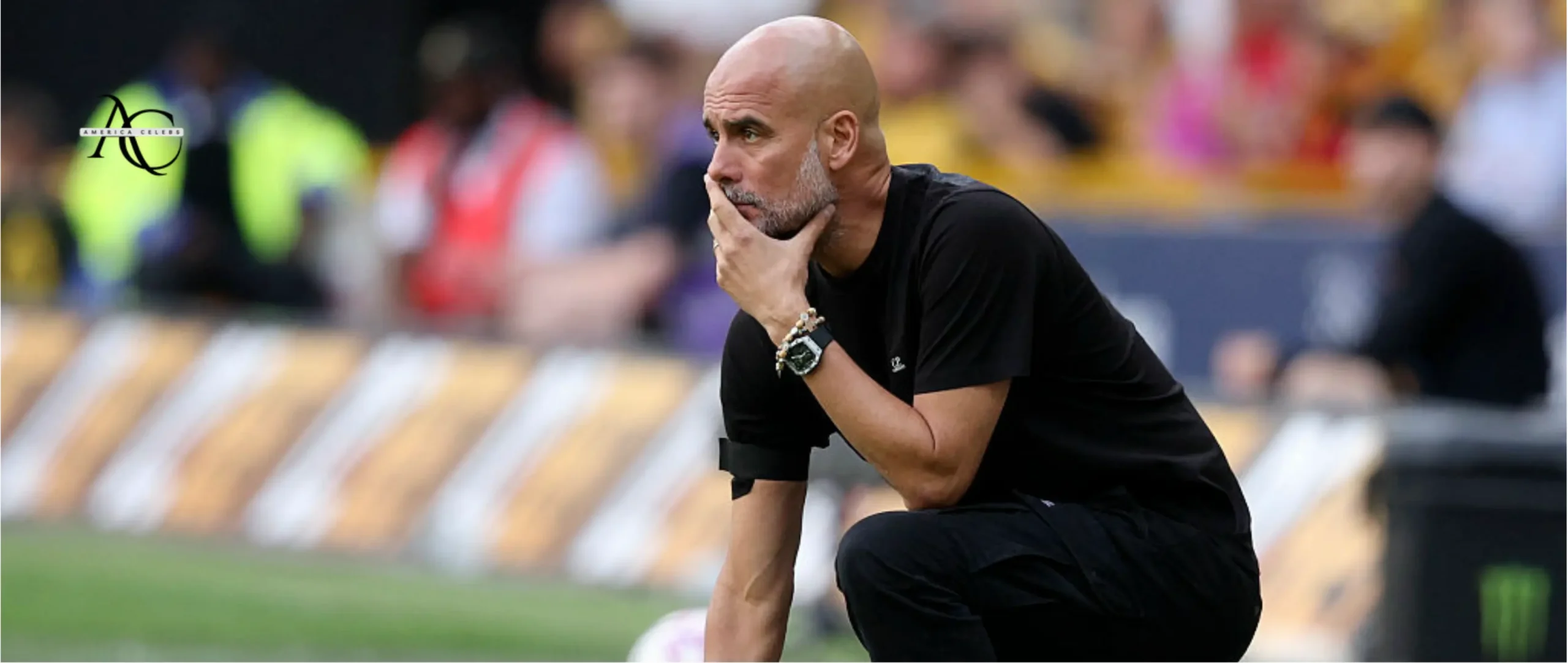
Pep Guardiola Net Worth 2026: Career, Salary and the End of a Manchester City Dynasty
On May 22, 2026, Manchester City confirmed what English football had been quietly dreading for months: Pep Guardiola was leaving. After ten years, 20 major trophies, six Premier League titles, a historic treble, and a decade that transformed a mid-table English club into one of the most dominant forces in the history of the sport, the most influential football manager of his generation was walking away.
| $100M Estimated Net Worth | £20M Annual Man City Salary | 35+ Career Trophies as Manager | 20 Trophies at Man City Alone |
Pep Guardiola Quick Profile 2026
| Full Name | Josep Guardiola Sala |
| Born | January 18, 1971, Santpedor, Catalonia, Spain |
| Age in 2026 | 55 years old |
| Nationality | Spanish (Catalan) |
| Height | 6 ft 1 in (186 cm) |
| Playing Position | Defensive Midfielder |
| Playing Career | 1990 to 2006 |
| Main Club | FC Barcelona (1990 to 2001), also Brescia, Roma, Al-Ahli, Dorados, Qatari clubs |
| International | 47 caps for Spain, 1992 Olympics gold medal |
| Coaching Career | 2007 to present |
| Clubs Managed | Barcelona B (2007 to 2008), Barcelona (2008 to 2012), Bayern Munich (2013 to 2016), Manchester City (2016 to 2026) |
| Man City Exit | Confirmed May 22, 2026; final game vs Aston Villa |
| Successor | Enzo Maresca (reported, in principle agreement) |
| Net Worth 2026 | $60 million to $120 million (estimated consensus: $100 million) |
| Man City Salary | £20 million base plus £5 million performance bonuses annually |
| Career Trophies | 35 or more major titles across Barcelona, Bayern Munich, and Manchester City |
| Barcelona Titles | 14 trophies in 4 years including 2 Champions Leagues and La Liga Sextet (2009) |
| Bayern Titles | 7 trophies in 3 years including 3 consecutive Bundesliga titles |
| Man City Titles | 20 trophies in 10 years including 2023 treble and 6 Premier League titles |
| Wife | Cristina Serra (married 2014, separated late 2024 after 30 years together) |
| Children | Three: Maria, Marius, and Valentina |
Who Is Pep Guardiola? Growing Up in Santpedor
Josep Guardiola Sala was born on January 18, 1971 in Santpedor, a small Catalan town just north of Manresa in northeastern Spain. His father Valenti was a bricklayer and his mother Dolors was a salesperson. It was a working-class upbringing in a household steeped in Catalan identity, and football was everywhere from the start.
He was obsessed with the game from early childhood. At age 13 he was identified by FC Barcelona’s scout network and transferred from his local youth team, Club Gimnastic Manresa Youth, to the famous La Masia academy. La Masia, the residential academy at Barcelona, was already producing some of the finest players in Spain, and the young Guardiola thrived in its technical environment.
It was at La Masia that Guardiola absorbed the footballing philosophy that would define his entire career as a manager: possession as control, high pressing to win the ball back immediately, positional superiority over individual athleticism. He was not just learning how to play. He was developing the blueprint he would later use to build some of the most devastating football teams the sport has ever seen.
Playing Career: From La Masia Prodigy to Barcelona Captain
Guardiola made his first-team debut for Barcelona in 1990 and spent eleven years at the club, becoming one of its most important players under the legendary coach Johan Cruyff. He played as a defensive midfielder, the organising engine of Cruyff’s revolutionary Dream Team of the early 1990s that won four consecutive La Liga titles and a European Cup in 1992.
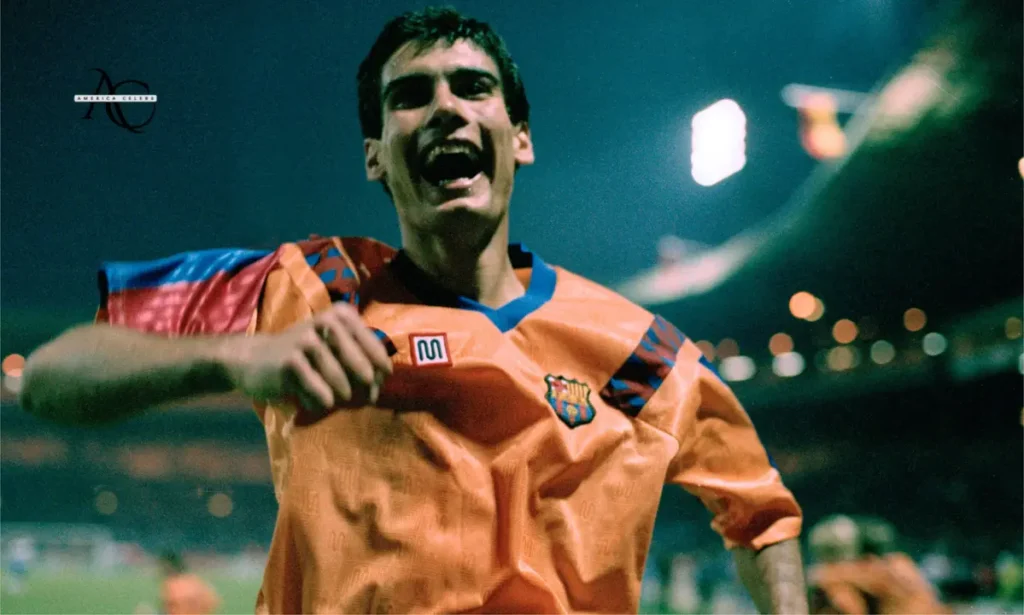
Under Cruyff, Guardiola did not just play football. He received a tactical education. Cruyff’s demand for positional discipline, his insistence on dominating through ball control rather than physical power, and his belief that football was fundamentally an intellectual exercise all found a willing student in Guardiola. He became captain of Barcelona and a symbol of the club’s identity.
International Career and the 1992 Olympics
Guardiola earned 47 caps for the Spanish national team between 1992 and 2001. His most celebrated international achievement came at the 1992 Barcelona Olympics, where he was part of the Spanish team that won the gold medal on home soil. He was selected for Spain’s squad at the 1994 and 1998 FIFA World Cups and at UEFA Euro 2000.
Life After Barcelona: Italy, the Gulf and Mexico
After leaving Barcelona in 2001, Guardiola spent his remaining playing years at Brescia and Roma in Italy, then at Al-Ahli in Qatar, Dorados de Sinaloa in Mexico, and Qatari club Al-Ahli a second time before retiring in 2006. None of those spells matched the significance of his Barcelona years, but they exposed him to different footballing cultures and environments that broadened his understanding of the game.
| Don’t ask me the reasons I’m leaving. There is no reason, but deep inside, I know it’s my time. Nothing is eternal, if it was, I would be here. Pep Guardiola on his Manchester City exit, May 22, 2026 |
Coaching Career Part One: Barcelona and the Sextet
Guardiola retired as a player in 2006 and began studying for his coaching badges. He was appointed manager of Barcelona B in 2007 at the age of 36, a relatively young entry into senior management. He spent one season with the reserve team, won promotion to the second tier of Spanish football, and impressed the Barcelona board enough to be given the first-team job in the summer of 2008, replacing Frank Rijkaard.
What followed across the next four seasons was one of the most extraordinary managerial achievements in the history of club football. In his very first season, 2008 to 2009, Barcelona won La Liga, the Copa del Rey, and the UEFA Champions League, becoming the first Spanish club to win the treble. That season they set a record for points in La Liga. It was not enough for Guardiola: the team had also won the Spanish Super Cup, the UEFA Super Cup, and the FIFA Club World Cup by the end of the calendar year, making it a Sextet, six trophies in a single calendar year. It had never been done before.
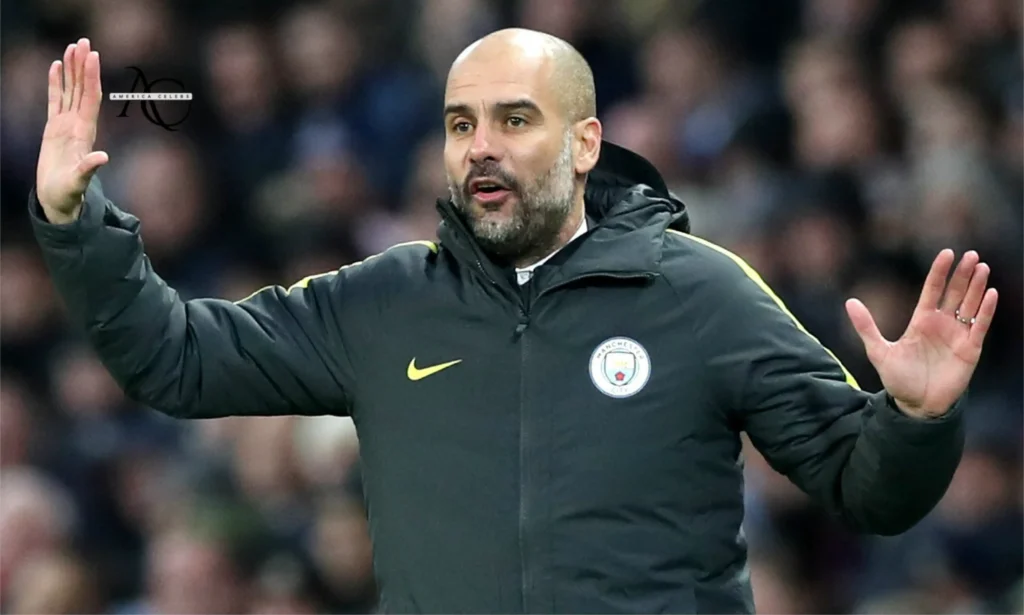
His Barcelona side featured Xavi Hernandez, Andres Iniesta, Lionel Messi, David Villa, and Carles Puyol among others, and played a style of football rooted in relentless pressing, short passes, and total positional control that became known globally as tiki-taka. The term polarised football people, some arguing it was the purest expression of the sport, others finding it formulaic, but nobody could argue with the results.
In four years at Barcelona, Guardiola won 14 major titles. He won two Champions Leagues, three La Liga titles, two Copas del Rey, two Spanish Super Cups, two UEFA Super Cups, and two FIFA Club World Cups. He left in 2012, citing exhaustion. He had given everything the role demanded, and he knew it.
Bayern Munich: Dominance Without the Treble
After a year’s sabbatical in New York spent studying the game, reading, and recovering his energy, Guardiola was appointed Bayern Munich manager in July 2013. He inherited a squad that had just won the Champions League under Jupp Heynckes and was expected to push it even further.
In three seasons at Bayern, Guardiola won seven trophies: three consecutive Bundesliga titles, two DFB-Pokals, two DFL-Supercups, and one UEFA Super Cup. The team was dominant in Germany but fell at the semi-final stage of the Champions League in each of his three seasons, twice to Real Madrid and once to Atletico Madrid. The inability to win the Champions League at Bayern became the central narrative of his time in Germany, despite the domestic success being near-total.
He left Bayern in 2016 having established himself as the most sought-after manager in world football. The question was which club would be next. The answer was Manchester City.
Manchester City: Ten Years, Twenty Trophies, One Era
Guardiola joined Manchester City in July 2016, signing a three-year contract. He would stay for ten. In that time he did not just make Manchester City successful. He made them historic.
Records That May Never Be Broken
In his second season, 2017 to 2018, City became the first team in Premier League history to reach 100 points in a single season. They won the title by 19 points, another record. That team was described by many analysts as the greatest in the history of the English top flight. They followed it with another title the following season.
City then won four consecutive Premier League titles from 2020 to 2021 through to 2023 to 2024, the first time any club had achieved four in a row in the league’s history. Six Premier League titles in total across his decade at the club.
The 2023 Treble
The pinnacle came in the 2022 to 2023 season when Manchester City won the Premier League, the FA Cup, and the UEFA Champions League, their first ever European title, in the same season. It was only the second time in English football history that the treble had been achieved, after Manchester United in 1999. Guardiola became the first manager to win the continental treble twice, having done it first with Barcelona in 2009.
The Exit, May 2026
City confirmed his departure on May 22, 2026. His final game was against Aston Villa on the last day of the Premier League season. He left with 20 trophies at the club, including a domestic double of the League Cup and FA Cup in his final season. Enzo Maresca, who had previously worked as Guardiola’s assistant at City, reached an agreement in principle to succeed him.
Pep Guardiola Net Worth 2026
Pep Guardiola’s net worth in 2026 is estimated between $60 million and $120 million across different sources, with the most frequently cited consensus figure sitting at approximately $100 million, equivalent to roughly £80 million. The variation across sources reflects the difficulty of assessing private wealth that includes property, investments, and contract bonuses that are not publicly disclosed.
- Manchester City salary: His reported annual package at City was approximately £20 million in base salary plus up to £5 million in performance-related bonuses for title wins and cup victories. Over ten seasons, this alone represents cumulative gross earnings in the range of £200 million to £250 million before tax, the largest single income source of his career.
- Barcelona and Bayern salaries: His four years at Barcelona as manager and three years at Bayern Munich added substantial managerial salary income before the City appointment. His Barcelona playing career, which spanned over a decade at one of the world’s biggest clubs during the 1990s, generated professional player earnings that formed the foundation of his personal wealth.
- Endorsements: Guardiola has held sponsorship deals with Puma and Qatar Airways among others. In 2019, reports suggested a partnership with Toyota worth a significant annual sum. His commercial value is tied directly to his profile as the most recognisable manager in world football.
- City Football Group role: Following his exit as manager, Guardiola confirmed he would remain connected to the City Football Group as a global ambassador, providing technical advice across the group’s clubs and projects. This continuing relationship will generate income and maintain his connection to elite football without the daily pressures of match management.
- Property: Multiple reports indicate property holdings in Catalonia and other locations built across three decades of elite-level earnings. A private divorce settlement with Cristina Serra, initiated in early 2025, is reported to have adjusted his liquid asset position, though specific figures have not been disclosed.
What Guardiola Changed About Football
The most lasting contribution Pep Guardiola has made to football is not a trophy or a record. It is a way of thinking about the game. The tiki-taka style he developed at Barcelona, built on Cruyff’s foundations, redefined what possession football could achieve at the highest level. Before Guardiola’s Barcelona, possession was seen as a means to an end. He made it the end itself, demonstrating that the team which controls the ball controls the game.
At Manchester City, he evolved further. The gegenpressing elements he incorporated, the high defensive line, the demand for technical quality in every position including the goalkeeper, the concept of positional play that he called positional football or juego de posicion, all became reference points for coaching courses, tactical analysts, and managers across every level of the sport.
Managers as different as Jurgen Klopp, Mikel Arteta, Eddie Howe, and dozens of others cite Guardiola’s influence on how they think about the game. His former assistants, including Arteta at Arsenal and Maresca at Chelsea and now Manchester City, have taken his principles into their own careers. The direct line of influence from Guardiola through his former staff to clubs across Europe is one of the most significant developments in the development of coaching over the past decade.
Personal Life: Cristina Serra, Three Children, and the Separation
Guardiola met Cristina Serra in 1994 in Barcelona, where he was modelling for designer Antonio Miro and encountered her family’s fashion boutique. They were together for 20 years before marrying in 2014. They have three children: Maria, who has pursued a career as a model and social media influencer; Marius, who is an entrepreneur and golfer; and Valentina, their youngest.
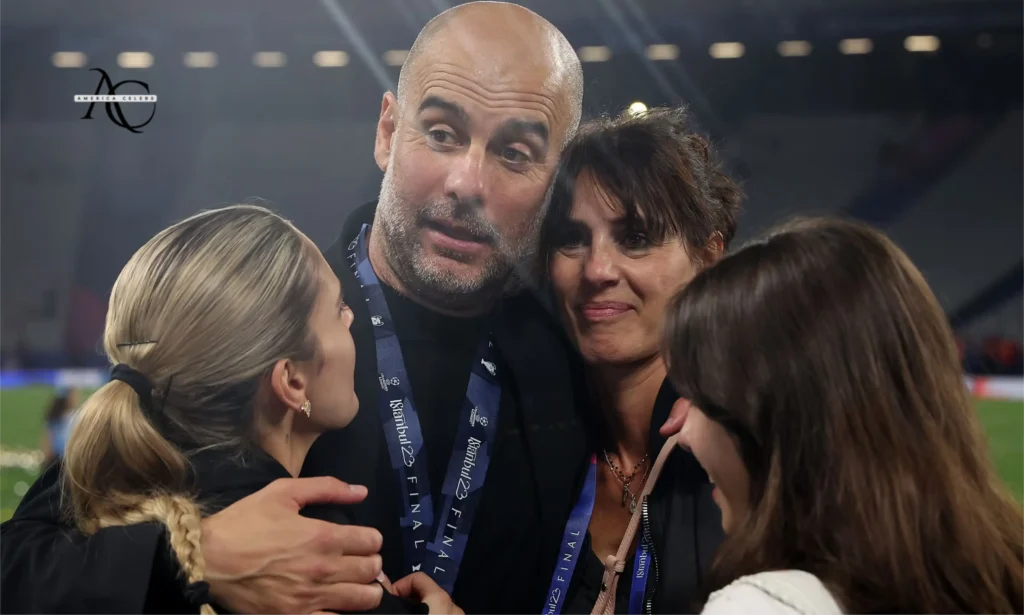
In 2019, Cristina returned to Barcelona with Valentina to focus on her fashion business, Serra Claret, leaving Guardiola in Manchester. The long-distance arrangement lasted five years. In late 2024, their separation was announced publicly. Reports described the split as amicable, with sources close to both parties citing the geographic distance and Guardiola’s decision to extend his City contract as the primary factors rather than any personal conflict.
The separation is reported to have affected Guardiola deeply during Manchester City’s difficult 2024 to 2025 season, a campaign in which the club fell well short of their usual domestic standards. Several former players and analysts suggested his personal circumstances had an impact on the team’s performances, though Guardiola himself never addressed the connection publicly. His decision to leave City in 2026 may owe something to a desire to rebuild his personal life on his own terms.
FAQs
Q1: How many trophies has Pep Guardiola won as a manager in total?
Pep Guardiola has won 35+ major trophies as a manager across Barcelona, Bayern Munich, and Manchester City. His biggest achievements include multiple league titles and 3 UEFA Champions League trophies. His 2009 Barcelona team also completed the historic Sextet.
Q2: What is the tiki-taka style of football and did Guardiola invent it?
Tiki-taka is a football style based on short passing, possession, and high pressing. Guardiola did not invent it, as the ideas came from Johan Cruyff, but he perfected it with Barcelona from 2008 to 2012. That Barcelona side became one of the greatest teams ever.
Q3: Why did Guardiola leave Manchester City in 2026?
Guardiola announced in 2026 that he would leave Manchester City after 10 years. He said it simply felt like the right time to move on. Personal reasons and completing his long-term project at City also influenced the decision.
Q4: Did Guardiola ever win the Champions League at Bayern Munich?
No, Guardiola never won the UEFA Champions League with Bayern Munich. He dominated domestically with three Bundesliga titles, but Bayern were knocked out in the Champions League semi finals every season under him.
Q5: What records did Manchester City set under Guardiola?
Manchester City broke several records under Guardiola, including 100 Premier League points in 2017 to 2018 and four straight league titles. They also won the 2023 continental treble of Premier League, FA Cup, and Champions League.
Q6: What comes next for Guardiola after leaving Manchester City?
Guardiola has not confirmed his next job yet. Reports suggest he could manage a national team, return to Barcelona, or take a break from football. He will still stay connected with City Football Group as a global ambassador.
Conclusion
Pep Guardiola is 55 years old and worth approximately $100 million. He has won 35 or more major trophies across three countries and three of the world’s most scrutinised clubs. He has been described by players, coaches, analysts, and rivals as the most influential football manager of his generation, and there is a serious argument that no manager in any era of the sport has produced consistent excellence at this level and this pace.
He leaves Manchester City with 20 trophies, six league titles, a Champions League, and a decade that fundamentally changed the identity and global standing of an English football club. No amount of analysis fully captures what it means to sustain that level of performance in the most scrutinised sporting league in the world for ten consecutive years.